Full Body Harness Safety
Free Safety Information


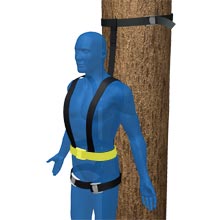
A component/structure to which a full-body fall arrest harness (FBH) is attached to the tree trunk.
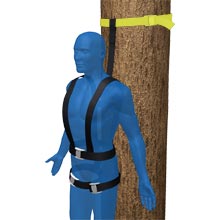
A strap/belt (or system of straps) which is fastened about the person in a manner so as to contain the torso and stabilize the users horizontal load while either working from a vertical position to attach treestands, climbing devices, and so forth, or during ascent/descent of tree or ladder. A FBH may be constructed to additionally serve this function.

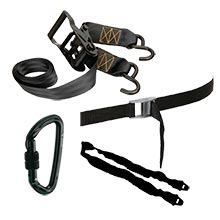
Includes snap hooks, D-rings, carabineers, links, anchorage hardware, and buckles. Any hardware that connects the fall-arrest system components in series, thus creating a linear linkage along which the maximum arrest force (MAF) acts.
Being in a position above ground level.

Every product has an expiration date which is usually shown on the label. When a product has passed its expiration date, the product should be replaced. Sometimes individual components such as ratchet straps can be replaced. Consult the manufacturer’s instruction manual or contact the manufacturer if you have any questions.

A full-body fall arrest harness system offered for sale which does not come standard with a treestand. Aftermarket harnesses typically offer more features and potential accessory options over OEM harness systems.
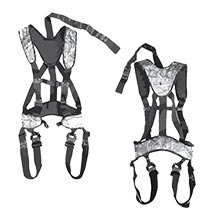
A treestand and/or treestand component manufacturer provided full-body fall arrest harness.
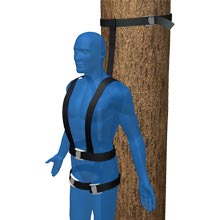
A potential life-saving device which comprises of a system that is assembled for the purpose of arresting an accidental fall of its user. A FAS consists of a full body harness, tether (sometimes referred to as a “lanyard”), anchorage means (i.e., “tree belt”), suspension relief device and in some instances, depending on treestand style, linemen’s or climbing belt.
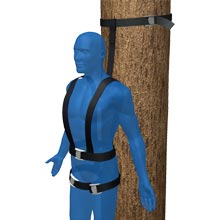
Component with a design of straps that is fastened about the person in a manner so as to contain the torso and distribute the fall arrest forces over at least the upper thighs, pelvis, chest, and shoulders, with means for attaching it to other components or subsystems.
Being on, or standing on the ground.
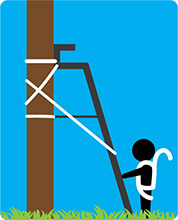
A component consisting of a flexible strap, rope, or wire rope for connecting a component such as a FBH directly or indirectly to an anchorage.
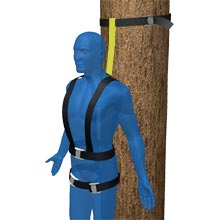
That portion of the full-body fall arrest harness which wraps around the legs.

A strap or rope (belt) which connects to the left and right side of a full body harness. The lineman’s style climbing belt goes around the tree to aid in climbing, and installing Hang-on (fixed-position) stands. The lineman’s style climbing belt is used in conjunction with a full-body fall arrest harness system which is attached to the tree.
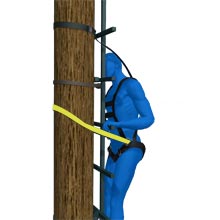
Can be any structure made by man, including: power generation equipment, telephone/power poles, manmade columns or structures. Do not use any stand on or near any manmade structures.

Every product comes with a written set of instructions. These instructions contain critical information on how to safely assemble, install, and use the product. You must keep these instructions the entire time you own the stand and pass it on to others who borrow or purchase the stand. The instructions should be reviewed at least annually.

Every manufacturer has issued warnings related to using their equipment above ground level. These warnings are contained in the manufacturer’s instruction manual and other specific locations, depending upon the type of product.
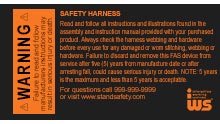
The maximum force acting on the body at the instant of an arrest of its free fall. Multiple user rated capacity (MUR), the maximum load capacity, not to be exceeded, of a treestand, tripod or tower stand as determined by the manufacturer for simultaneous multiple users.

The maximum load capacity, not to be exceeded, of a treestand, harness, climbing stick, tripod, or tower stand as determined by the manufacturer.
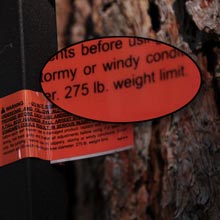
The maximum load capacity, not to be exceeded, of a treestand, climbing stick, tripod, or tower stand as determined by the manufacturer.
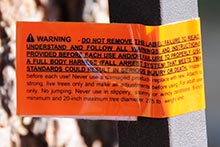
A component used to reduce/absorb the energy gained by the user of the FAS when falling.

That portion of the full-body fall arrest harness which wraps over the shoulders.

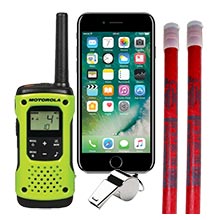
Can be any device that enables the user to alert others for help. Examples include, but are not limited to, a mobile phone, radio, whistle, signal flare or personal locator device.
Any indication of damage that could be caused by a wide range of things including the outdoor elements, sun, freezing temperatures, aging equipment, animals, tree growth, etc. Some examples are: cracking, torn fibers, looseness, fading, etc.
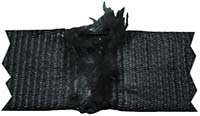
Device to allow relief of a person’s weight on the lower extremities if suspended in a harness or allow the user to descend to the ground. The device is to help maintain circulation in the legs and help prevent suspension trauma (blood pooling).

If you hang suspended in a harness, the circulation in your legs will be restricted which causes blood pooling in the legs. Suspension trauma can be fatal! You must get back into your treestand or get back down to the ground as soon as possible. If you cannot, you must use a suspension relief device and do other forms of continuous leg exercises until help arrives.

A strap that connects your harness to the tree belt. The tree belt should be adjusted to eye-level or above when standing and the tether (also sometimes referred to as the “lanyard”) strap should have no slack in the tether when sitting.

The straps, which are integrated with the buttock strap (optional) and are routed from back to front across the groin area or loop around the upper part of the thigh.
The Treestand Manufacturer’s Association (TMA) is a nonprofit trade association that specifically devotes its resources to promoting treestand safety through education. It endeavors to improve treestand safety with the support of its members and also by fostering relationships with organizations having similar goals. Their website address is www.tmastands.org.

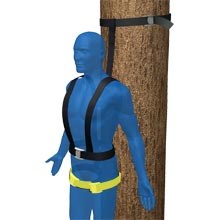
A strap that wraps around the trunk of the tree, from which you attach your tether strap. The tree belt should be adjusted to eye level or above when standing and the tether strap should have no slack in the tether when sitting.

The consumer or end user of the manufactured product.
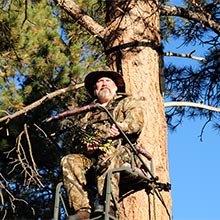
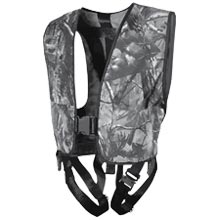
A vest that has a Full Body Harness incorporated into the vest. If you use a vest style harness, make sure it meets industry standards recognized by TMA.
That portion of the full-body fall arrest harness which wraps around the waist.